

Ninjitsu, the shadowy art of espionage and stealth, holds a special place in Japanese martial lore. The term ‘Ninjitsu’ itself carries profound meaning, often translated as the “art of endurance” or “perseverance.” It’s got this mystique that immediately draws you in, primarily because it operates from the shadows, unlike other martial arts that emphasize direct confrontation.
To get to grips with where Ninjitsu began, we dive back into the mists of time, focusing on feudal Japan. It likely began around the 15th century, born out of necessity rather than sport or discipline. Imagine Japan in turmoil, with endless skirmishes among warlords and samurai wreaking havoc. This chaos gave rise to the need for covert operations, hence Ninjitsu was conceived as an art of survival and subterfuge for those trying to outwit the dominant warrior class.
The stealthiness of Ninjitsu is what really sets it apart. While others trained for honorable combat, ninjas mastered the secret arts of distraction and surprise. Their training wasn’t just about fighting, but also involved espionage, escape techniques, and even spiritual discipline to keep calm under pressure. Ninjitsu was like an all-encompassing survival kit for those chaotic times.
The socio-political landscape of Japan during the time was also a massive contributor. The feudal system, with its constant power struggles and need for intelligence gathering, created a fertile ground for the ninjas to thrive. They weren’t just renegades but were crucial to many daimyos (feudal lords), serving them as covert spies, scouts, and messengers.
Understanding how Ninjitsu started provides a glimpse into the cultural fabric of historical Japan. It wasn’t just about becoming invisible; it was a pragmatic response to the socio-political upheaval of an era—a true testament to human adaptability and ingenuity.
The Philosophy of Ninjitsu: Beyond the Martial Techniques
Ninjitsu isn’t just about throwing stars and stealth moves. At its core lies a profound philosophy, emphasizing much more than physical skills. This martial art embodies a balance of mental and spiritual discipline. Imagine facing the most intense scenarios with a calm mind—that’s Ninjitsu.
The mental component is everything here. Practitioners hone their psychological agility, often engaging in mental warfare rather than physical. The idea is to outthink opponents, reading them, predicting moves before they happen. It’s like a game of chess, with every move calculated with precision.
Nature plays a huge role in Ninjitsu practice, which makes it quite unique. Ninjas train to blend into environments, utilize natural elements, and adapt to surroundings, turning the environment into an ally. This environmental awareness is a key survival tactic, drawing from the art’s historical roots.
A strong ethical framework underpins Ninjitsu. Despite its sometimes nefarious reputation, historical ninjas followed strict codes of conduct. They valued loyalty and discretion, understanding the weight of their actions. This moral compass ensured Ninjitsu wasn’t just raw power; it was wielded with responsibility.
At its core, Ninjitsu teaches the value of remaining unseen while being acutely aware. It’s a reminder that strength isn’t always about overpowering; sometimes, it’s in knowing when to act and when to disappear into the shadows. For modern practitioners, this philosophy encourages strong internal development, balancing the mind and body.
Legendary Figures in Ninjitsu: The Shadows of Hierarchy
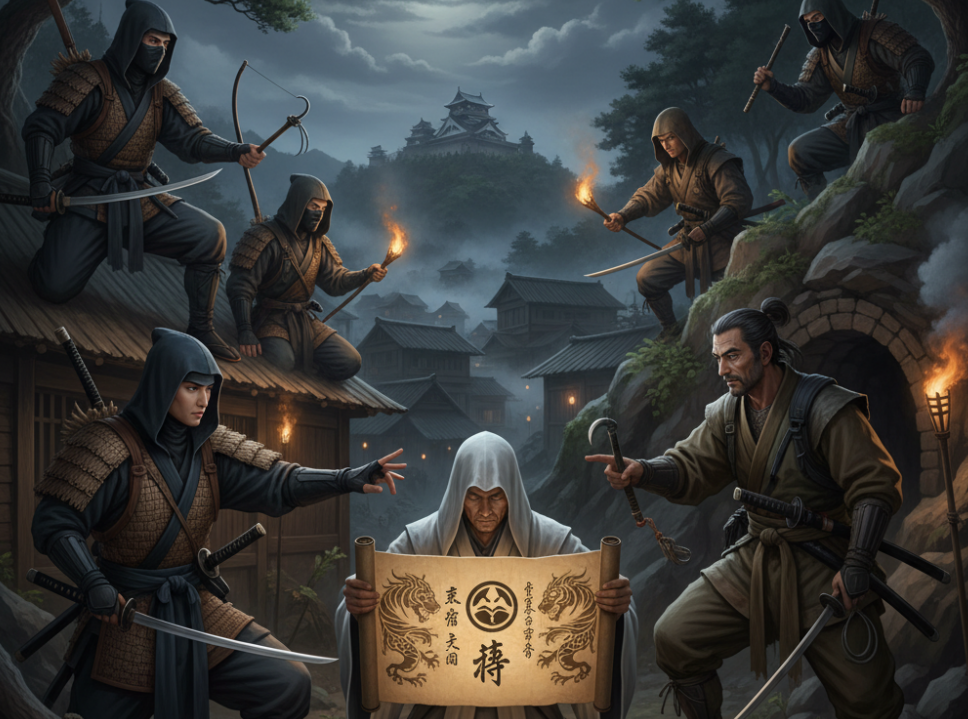
When we think of Ninjitsu, our minds often drift to the intriguing tales of legendary ninjas who moved through history-like whispers. With names that echo through time, these figures played pivotal roles in shaping Japan’s past. The stories of the Iga and Koga clans, two of the most famous ninja groups, paint a vivid picture of life in the shadows.
These clans were intricate webs of relationships, family training, and alliances, each member playing a crucial role. Family ties and loyalties ran deep, securing their place in history. Not just skilled in combat, Iga and Koga ninjas were masters of intelligence gathering and subtle manipulations from behind the scenes.
While many tales have mixed fact with fiction, legends like Hattori Hanzo and Mochizuki Chiyome stand out. Hattori, a pivotal figure in aiding Tokugawa Ieyasu, played a direct role in shaping the course of the nation. Mochizuki, on the other hand, is credited with creating a network of female ninjas, the “kunoichi,” marking a fascinating chapter in ninja history.
The art of espionage and disguise was developed into an almost sacred craft, with skills passed down through generations in secret. It was less about the flashy moves and more about strategic intelligence and resourcefulness. Through cunning and craft, these ninjas wove themselves into the fabric of medieval Japanese politics.
Yet, uncovering their stories involves sifting through layers of myth and historical fact. The ninja image we often see is a creation of both genuine historical accounts and embellished tales. Nonetheless, these individuals’ legacies are undeniable, showcasing not only their skills but also their impact on Japanese history and culture. Their stories reveal a world where patience and strategy trump brute force, offering a lesson in the power of subtlety.
The Contemporary View: Ninjitsu in the Modern World
Ninjitsu today is far different from its origins but continues to capture the imagination. It’s no longer just a Japanese phenomenon but a global practice, adapting to modern needs while preserving ancient roots.
Despite its traditional beginnings, modern Ninjitsu has been shaped by its integration into global martial arts communities. This art, with its focus on self-defense and personal growth, is practiced by enthusiasts worldwide, blending historical techniques with contemporary self-defense strategies.
The influence of Ninjitsu spreads beyond the dojo and into pop culture, inspiring countless films, books, and media. The mysterious allure of the ninja has turned these practitioners into cultural icons, appearing as symbols of stealth and cunning in everything from Hollywood blockbusters to video games.
In modern practice, Ninjitsu schools often emphasize mental fortitude and adaptability, reflecting its original philosophy. Instructors teach not only physical techniques but also situational awareness and decision-making. These skills translate into today’s fast-paced environments, making Ninjitsu relevant to everyday life.
Women’s participation in Ninjitsu has also seen a positive shift, with more women training and contributing to the art. This evolution signifies a broader acceptance and a breaking down of old barriers, lining up with contemporary values of equality and diversity.
Celebrating Sho Kosugi: The Contribution of a Legendary Ninjitsu Master
Sho Kosugi stands as a towering figure in the world of Ninjitsu, bringing the ancient art to life in ways that resonated with audiences around the globe. Born in Japan and later transitioning to Hollywood, Kosugi is credited with popularizing ninjas, making them household names through his dynamic portrayals in film during the 1980s.
With his martial arts prowess and charismatic screen presence, Kosugi introduced Ninjitsu to mainstream cinema. His performances weren’t just about spectacle; they conveyed a sense of authenticity and reverence for the traditional skills he mastered. His movies like ‘Enter the Ninja’ and ‘Revenge of the Ninja’ are still considered seminal works, highlighting not just flashy moves but also the strategic genius of ninjas.
Beyond the screen, Kosugi’s contributions extend into martial arts education. He has tirelessly promoted Ninjitsu’s art and philosophy, bridging cultural gaps and inviting more people to explore its depths. He encourages students to appreciate Ninjitsu not just as physical discipline but as a holistic practice involving the mind, body, and spirit.
Sho Kosugi’s legacy is profound. His influence is seen not just in how Ninjitsu is perceived in pop culture but also in how it’s practiced globally. He symbolizes the transition of Ninjitsu from an ancient art of battle to a modern practice of personal development and artistic expression. By bringing the ninja mystique into the spotlight, Kosugi ensured that this once-secretive art continues to inspire new generations.