
Ninjitsu isn’t just about high kicks or vanishing in a cloud of smoke. For centuries, ninja in Japan relied on a wide range of unique weapons and tools to handle missions that involved spying, self-defense, or finding their way through dangerous situations. Knowing what gear the ninja actually used can really switch up how you think about these mysterious figures, moving beyond all the myths from movies and comics. Here, I’m covering the key weapons and handy gadgets that made up the ninja’s toolkit, and I’ve also included tips for anyone interested in exploring ninjitsu gear themselves.
The World of Ninjitsu Weapons and Tools
People sometimes imagine ninja used only flashy swords or throwing stars, but their collection was much more diverse. Ninja prioritized adaptability in both weapon choice and tool use. These weren’t just weapons; a lot of them doubled up for climbing, sneaking, or escaping tight spots. Historical records show ninja operated during Japan’s feudal period, sneaking through castles, scaling walls, and carrying out missions without attracting attention. Their weapons reflected this need for resourcefulness.
Many ninja tools came from everyday farming or construction implements, helping them avoid suspicion. At the same time, these items had to be practical in use, easy to hide, quick to put into action, and effective in close quarters. What looked like a farmer’s tool could, in a ninja’s hand, become an asset both for stealth and for self-defense, letting them blend in when needed.
Iconic Weapons Used in Ninjitsu
A few tools pop up more often in stories about ninja, and there’s good evidence that historical ninja used these—or at least some version of them:
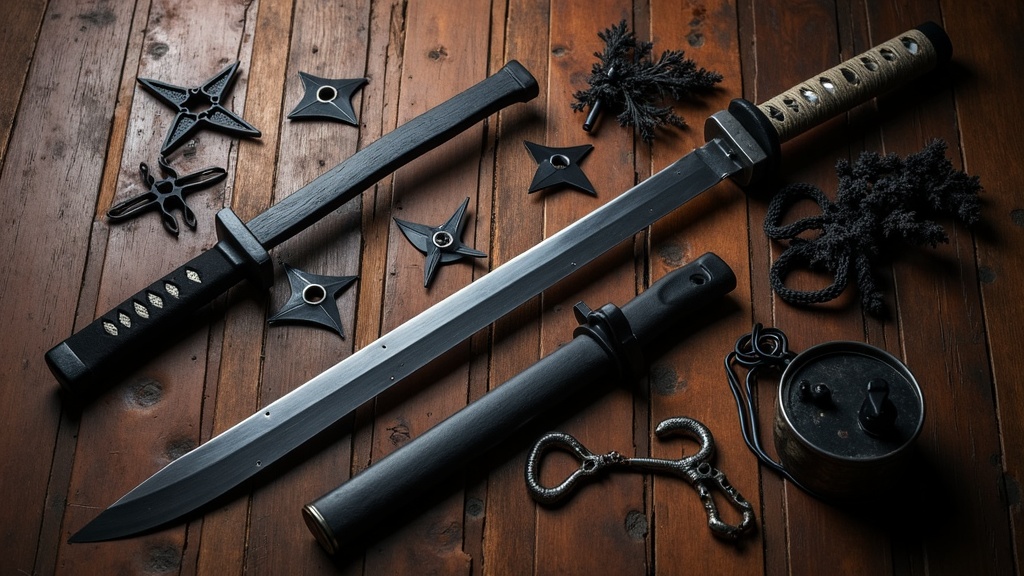
- Ninjato (Short Sword): This straight-bladed sword, shorter than the classic samurai katana, was often carried in a simple scabbard and used for fighting or climbing. The ninjato wasn’t meant for grand sword fights. It was reliable, compact, and sometimes doubled as a step when bracing against walls.
- Shuriken (Throwing Stars): Probably the most recognized ninja tool, shuriken show up in many shapes: stars, spikes, and flat plates. Their main use was as distractions, not like Hollywood depicts. Ninja threw them to startle or wound, buying precious seconds to get away.
- Kunai: This pointed, all-metal tool looked a bit like a trowel. Used for digging, prying doors, and, in a pinch, as a stabbing weapon, kunai brought utility and reliability to the ninja’s gear.
- Makibishi (Caltrops): Small, spiked objects meant to injure the feet of pursuers if scattered on a path. These were invaluable in making escapes smoother, especially in chases.
- Fukiya (Blowgun): Light tubes for launching darts, sometimes dipped in poison. The blowgun offered silent range for closer targets and situations where stealth trumped force.
Getting Familiar with Ninja Tool Functions and Uses
If you check out ninja gear a bit more, you’ll notice many had functions that made them more practical than they might first appear:
- Climbing Tools: Hooks, claws, and rope ladders helped ninja move vertically. The Kaginawa (grappling hook) could latch onto beams or parapets, and ashiko (foot spikes) provided better grip for scaling walls.
- Disguise Implements: Ninja usually carried disguises, like makeup kits, wigs, and reversible clothing to blend in anywhere. These weren’t weapons but were essential for many missions.
- Explosives and Smoke Devices: Sometimes, ninja used small packets containing gunpowder, called metsubushi, for temporary blinding effects, or little noisemakers to throw off enemies.
- Simple Defensive Tools: Metal-reinforced fans (the tessen) weren’t just for cooling down; they worked as shields or makeshift clubs and were easy to conceal.
Quick Start Tips If You’re New to Ninjitsu Gear
Trying out ninjitsu equipment brings a learning curve. Here are a few basics to get you started safely and with the right approach:
- Start With Safe Replicas: Modern training gear uses rubber or wood for a reason—it’s much safer when you’re learning. These replicas help you get used to the weight and feel of different tools without unnecessary risk.
- Understand Local Laws: Some ninja weapons, like shuriken or concealed knives, are illegal in many places. Always check rules before buying or carrying any potentially dangerous gear.
- Take a Class or Find a Guide: A certified ninjitsu instructor can walk you through practical techniques and safe handling, which makes your practice both safer and more rewarding.
- Focus on Practical Skills: Many tools value dexterity over strength. Doing simple drills improves accuracy, grip, and movement memory.
- Combine Fitness with Tool Work: Climbing wall gyms or obstacle courses can train your body the same way ninja training did—agility and balance matter as much as knowing your gear.
Things to Know Before Investing in Ninja Weapons
Diving into authentic ninja gear or weapons takes some thought. Here’s what to consider:
- Real vs. Replica: Collectors sell both antiques and affordable replicas. Genuine antiques can be costly and require special care. Replicas—especially those meant for practice—are easier to learn with.
- Storage and Safety: Keep sharp or pointy items locked up or properly displayed, especially if you live with others.
- Space and Portability: Think about where you’ll train or display your tools. Some need more space than others.
- Focus On Use, Not Just Looks: Some replicas only look cool but aren’t suitable for real training. Opt for steel tools with good reviews, or ask around in martial arts forums.
- Community Feedback: Joining a ninjitsu group—whether local or online—is useful for honest feedback and finding the best resources for getting legitimate, reliable gear.
Ninjato and Sword Safety
Swords can be impressive, but safety comes first. Beginners should choose blunt-training blades or foam swords for practice, especially if practicing indoors or in tight spaces.
Shuriken: The Truth About Throwing Stars
Perfecting shuriken throws takes time and a safe target. Try using wooden boards in your backyard (if legal), and always wear safety glasses and check for anything nearby that could be damaged by a missed throw.
Keeping Tools Legal and Respectful
Some places have strict rules about ninja gear. Laws change, so staying up to date helps you avoid hassle. Using training gear at home is usually more acceptable, but always double-check local rules if you want to practice in public or while traveling.
Collecting or practicing with ninja tools today brings fresh appreciation for the skills, creativity, and adaptability these historical figures demonstrated. The focus with ninjitsu tools is on resourcefulness and smart problem-solving, qualities that never go out of style.
Leveling Up: Advanced Tips and Modern Applications
Once the basics are down, you can experiment with more complex drills and see how modern ninjitsu keeps old traditions alive:
Mix Tools for Challenge Courses: Build obstacle courses that use climbing gear, caltrops (safely), and balance drills for a full-body workout. Many modern ninja gyms offer safe versions of traditional tests of agility.
Add Self-Defense Training: Some classic ninja weapons, like the tessen or kubotan (a small baton), work well for everyday self-defense where it’s legal. Adapting traditional moves to modern scenarios is practical and keeps training interesting.
Try Tool Maintenance or DIY: Learning metalworking basics or how to repair or make your own practice tools helps you connect with the past and can save you money.
Keeping training varied prevents boredom and gives you greater respect for how ninja adapted to any challenge they faced.
The Basics: Key Tools To Get Started With
Sticking with just a handful of core tools is a smart way to kick things off. I usually suggest beginners look for:
- Practice Shuriken: Foam or rubber stars for safe target practice.
- Training Ninjato: Blunt swords or bokken (wooden swords) for safe learning and drills.
- Rope or Grappling Hooks: For climbing drills only in safe, supervised spots.
- Kunai Replicas: Sturdy, dull versions double as digging or prying tools for practice.
- Obstacle Course Gear: Mats, cones, and safe barriers to mimic classic ninja agility exercises.
Remember that ninja relied on what was handy and practical—being resourceful is a mindset worth having from the start.
Frequently Asked Questions
Many beginners wonder what’s really useful to buy, and how to use ninja gear both safely and legally. Here are a few common questions:
Question: Do real ninja weapons still exist today?
Answer: Antique ninja weapons survive in museums and private collections, but most tools sold online are modern reproductions made for practice or display.
Question: Are ninja weapons legal to own?
Answer: Laws vary a lot by region. Shuriken and hidden weapons are often restricted, so always check local regulations before making a purchase.
Question: Can I train in ninjitsu without weapons?
Answer: Definitely! Many ninjitsu schools begin with unarmed moves or safe props, and only add weapons as students get more advanced.
Finding Your Way in the World of Ninja Tools
Ninja tools show how creative thinking and adaptability really count in self-defense and survival. Even if you never plan to sneak into a castle, checking out the world of ninjitsu gear is both fun and a good way to build a broader martial arts skillset. With safe practice and the support of a community, it’s easy to dig into this fascinating slice of history in a responsible way.